
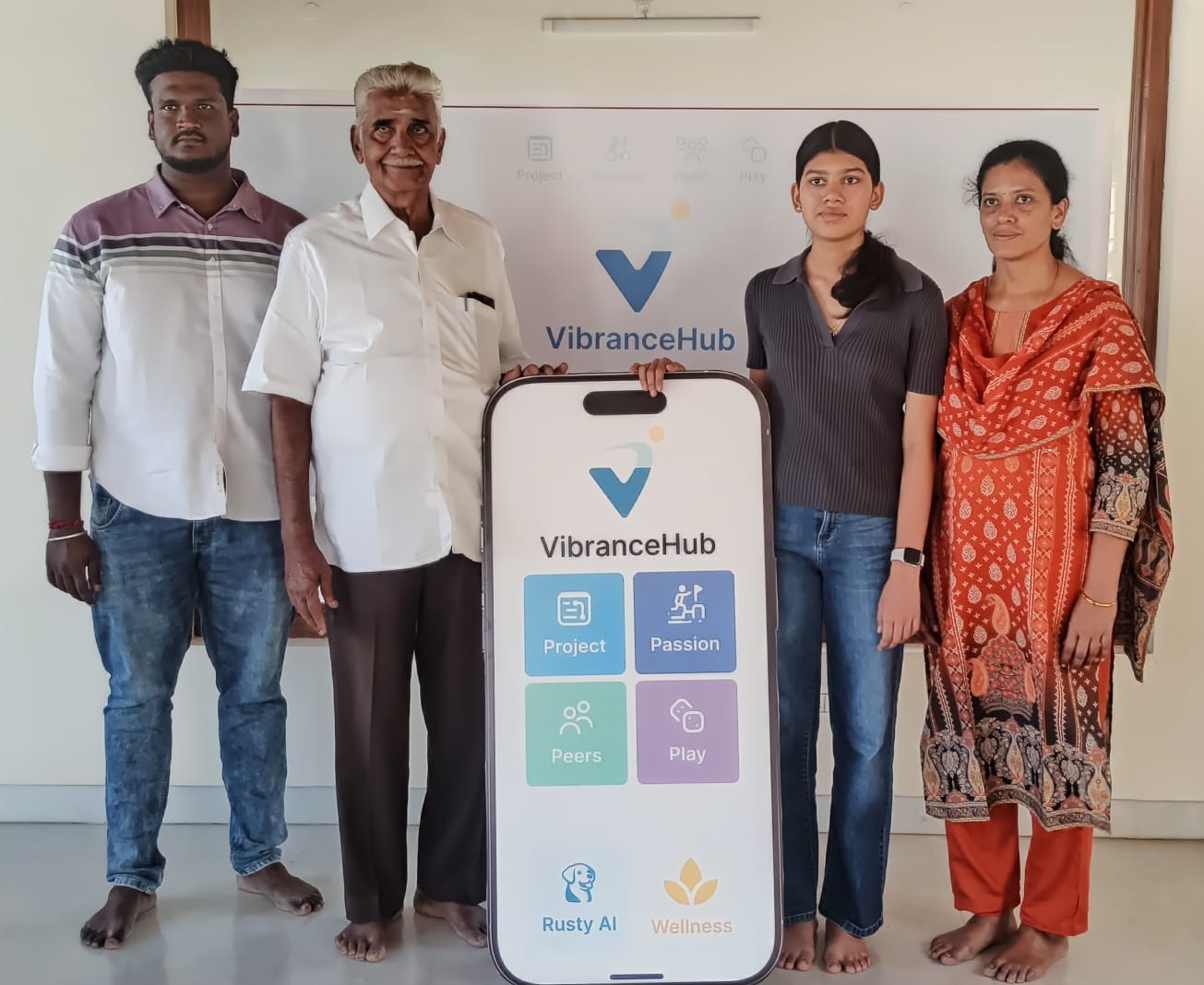
COIMBATORE — Rithanya Sivaram, a Class 12 student at The Indian Public School, has launched Vibrance Hub, a platform designed to merge project-based learning with an emphasis on peer collaboration and wellbeing. This initiative addresses a critical gap as India prepares its students for an AI-dominated future, where creativity and sustained innovation outweigh rote knowledge.
“In the age of AI, information is commoditized,” Sivaram states. “What matters now is what you can make, how you think, and whether you can sustain creative work over time.” She highlights that while Atal Tinkering Labs provide the tools for students to explore, Vibrance Hub offers the essential support system, community, and wellbeing practices crucial for transforming interests into sustained projects.
Drawing from MIT’s Lifelong Kindergarten framework that emphasizes Passion, Projects, Peers, and Play, Vibrance Hub is more than just a space for hands-on learning; it aims to foster essential skills like computational thinking, resilience through iteration, and collaborative problem-solving—qualities that remain irreplaceable by any AI technology.
Sivaram’s innovative approach represents a significant shift back to India’s educational roots. Historically, the country’s gurukul system emphasized learning through active creation rather than passive knowledge consumption. Students engaged in practical experiences across various fields, enhancing their skills through hands-on practices—much like what Vibrance Hub aspires to provide today.
The National Education Policy 2020 recognizes the need for a maker-centric approach, understanding that India’s future hinges on fostering creators and innovators instead of mere information repeaters. The policy serves as a guiding framework for initiatives like Vibrance Hub, aiming to revitalize education through practical engagement.
Since its launch in 2016, the Atal Innovation Mission (AIM), spearheaded by NITI Aayog, has taken ambitious strides to operationalize this maker-centric philosophy on a national scale. The AIM initiative aligns with NEP 2020’s objective of nurturing creativity and fostering innovation by providing tangible infrastructure for hands-on learning across India.
“The aim of Vibrance Hub is to create a supportive ecosystem for students interested in maker education,” Sivaram elaborates. Students from diverse backgrounds will collaborate, and the integration of well-being practices like yoga will help enhance their mental health, crucial in the fast-paced world of constant change.
As Vibrance Hub steps forward, it seeks to establish itself as a beacon of innovative education, empowering students to adapt and thrive in an increasingly uncertain world. Through community-driven initiatives and an unwavering focus on well-being, Sivaram’s project could very well signal the dawn of a new educational paradigm in India — one that champions creativity and hands-on learning as core components of development.
