
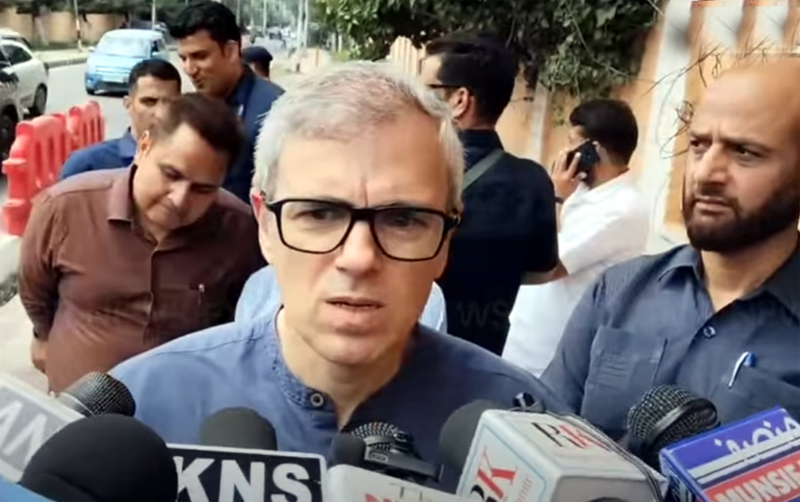
On September 26, Jammu and Kashmir Chief Minister Omar Abdullah criticized the arrest of climate activist Sonam Wangchuk as “unfortunate,” accusing the BJP-led NDA government of failing to adhere to its commitments. Abdullah spoke to reporters during the inauguration of the third Junior Asian Pencak Silat championship, where he condemned the central government’s approach towards Wangchuk.
Abdullah noted, “This (Wangchuk’s arrest) is unfortunate. The way the Central government was after him since yesterday, it seemed they would do something like this.” His remarks come amid rising tensions in Ladakh following recent violent protests that left four dead and over 90 injured.
Wangchuk, a prominent member of the Leh Apex Body (LAB), was arrested shortly after the protests. Although the specific charges against him remain unclear, the central government accused him of provoking violence, particularly in the context of ongoing agitation for statehood for Ladakh and its inclusion under the Sixth Schedule of the Constitution.
During his address, Abdullah highlighted the broken promises made by the central government. He reminded that before the Hill council elections in Leh in 2020, a Union minister visited the region to encourage public participation, leading to a significant turnout that ultimately favored the BJP.
He stated, “Promises were made to make people contest and participate in the elections. Not only did the people then participate in the elections in huge numbers, but they made BJP win. But the promises were not kept, same as with us.” Abdullah underscored that after this electoral participation, the demands for restoring statehood to Jammu and Kashmir have remained ignored.
Referring to the commitment of restoring Jammu and Kashmir’s statehood after assembly elections, Abdullah expressed discomfort. He questioned whether the central government was withholding statehood merely because the BJP failed to gain power in the region.
“If that is the case, then they should tell the court that till BJP doesn’t form the government in JK, statehood will not be restored,” he asserted, showcasing his criticism of the central government.
In response to allegations from the Leader of Opposition (LoP) in the Jammu and Kashmir assembly, Sunil Sharma, who accused Abdullah of justifying the violence in Ladakh, the Chief Minister remarked that BJP leaders often assign blame to others without self-reflection.
As the situation evolves in Jammu and Kashmir, the ongoing tension reflects the complex dynamics of regional politics, public sentiment, and the government’s responsibilities.
Abdullah’s statements align with the broader discontent among residents regarding unfulfilled promises and underscore the urgency for dialogue and resolution in the Union Territory. The implications of Wangchuk’s arrest and the community’s response could significantly influence future political engagements, particularly in light of Ladakh’s ongoing struggle for autonomy and recognition.
