
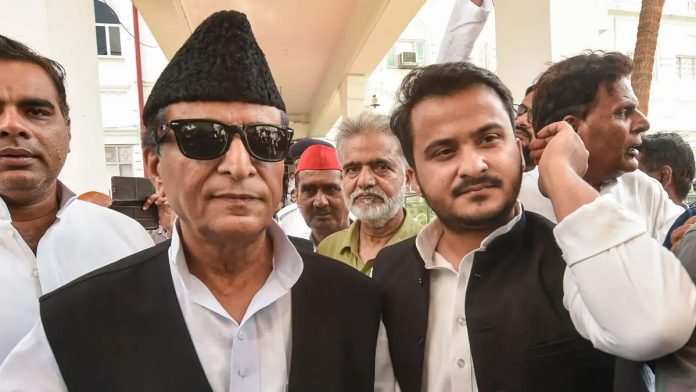
Rampur witnessed a significant legal ruling on Monday as senior Samajwadi Party leader Mohammad Azam Khan and his son Abdullah Azam were convicted for forgery. A special MP/MLA court sentenced the duo to prison terms of up to seven years in a case dating back to 2019.
The court’s decision stemmed from their involvement in procuring two PAN cards under false pretenses, specifically using different dates of birth. Special Magistrate Shobhit Bansal found both father and son guilty after a careful examination of documentary evidence and witness testimonies.
Prosecution Officer Rakesh Kumar Maurya confirmed the conviction, stating the prosecution might appeal the judgment if they deem the sentence insufficient. “We will review the judgment closely,” Maurya noted.
Post-conviction, when questioned if the father-son duo would face immediate custody, Maurya affirmed, “Yes, absolutely.” This marks a crucial development in their legal saga, intensifying the spotlight on political accountability.
The case began in 2019 following a complaint from local BJP leader Akash Saxena. The allegations included multiple charges under the Indian Penal Code, including cheating, forgery, and criminal conspiracy.
Prosecutors presented evidence showing that Abdullah applied for a PAN card from the Income Tax Department, listing his date of birth as January 1, 1993. This date reportedly matched records from his school, high school, and State Bank of India account. However, the court determined that Abdullah had leveraged a forged PAN card “in conspiracy with his father” for official purposes.
The implications of this ruling extend beyond the immediate penalties for the accused. The case has stirred discussions on the integrity of political figures in India, highlighting the judiciary’s role in upholding law and order regardless of status.
As political analysts note, this conviction could reshape the dynamics within the Samajwadi Party in Uttar Pradesh, showcasing the impact that legal challenges can impose on electoral prospects.
Legal experts indicate that the case may also inspire similar investigations into fraudulent practices associated with public representatives, reinforcing the necessity for accountability in governance.
In a statement following the conviction, political observers remarked on the growing scrutiny of elected officials and emphasized the importance of maintaining transparency in such positions. “This sends a strong message that no one is above the law,” they stated.
