
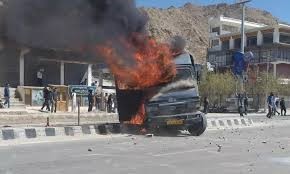
In a tragic turn of events, four individuals lost their lives and 30 others sustained injuries during violent clashes between protesters and security personnel in Leh, Ladakh, on Wednesday. The unrest stemmed from a shutdown called by the Leh Apex Body (LAB) as locals pushed for greater autonomy and the extension of the Sixth Schedule to enhance self-governance.
The confrontation escalated as protesters clashed with police, leading to police firing in a bid to restore order. Officials reported significant violence, including attacks on a BJP office and damage to numerous vehicles.
Eyewitness accounts reveal that tensions flared after two hunger strikers were hospitalized following a 35-day protest that began on September 10. The hunger strike aimed to demand statehood for Ladakh and the implementation of the Sixth Schedule provisions.
The incident has raised serious concerns regarding public safety and governance in the region. Protest leaders asserted that police action caused the fatalities, igniting further anguish among demonstrators who argue for their rights. Community members expressed deep sorrow over the loss of life.
The call for protests emerged from frustrations that have been building since Leh was made a Union Territory (UT) in October 2019. The LAB, representing various stakeholder groups, has been vocal in its demands, emphasizing the need for political and economic stability.
Amidst the escalating situation, security forces implemented increased measures to manage crowds and maintain public order. Officers warned that unrest could lead to long-term ramifications for the region, affecting tourism and local businesses.
Authorities continue to assess the situation and have urged peaceful dialogue between the government and representatives of the Leh Apex Body. Union Home Minister Amit Shah and other officials may address the concerns raised by the protesters, signalling a willingness to engage with community leaders.
As the situation develops, activists and local leaders call for calm while reasserting their demands for statehood. The need for constructive dialogue has never been more pressing as Ladakhis navigate this turbulent period. Experts believe that a mutually agreed solution could pave the way for a stable political environment, ultimately benefiting the residents of Ladakh.
In conclusion, the tragic incidents in Leh highlight the urgent need for the government to address the aspirations of the local population while ensuring peace and security. A careful balance of rights and governance will be crucial as India moves forward in addressing the concerns of a diverse and vibrant Ladakhi community.
