
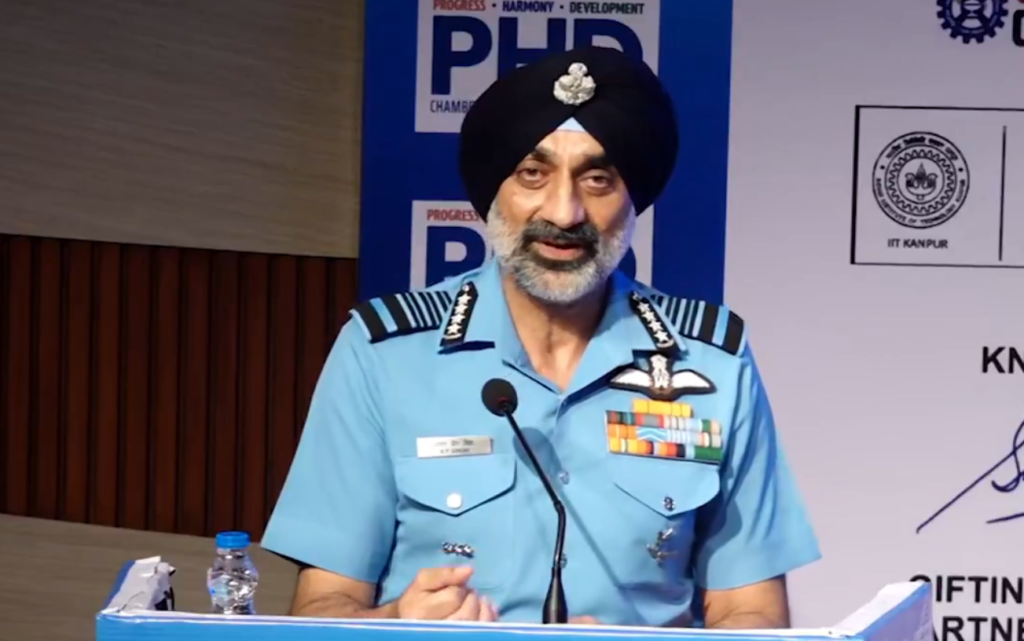
The evolution of modern warfare increasingly relies on unmanned systems, and Air Chief Marshal Amar Preet Singh underscored the need for India to develop its drone ecosystem fully. Addressing the Bharat Drone & Robotics Manthan 3.0 conference, Singh pushed for a collaborative environment between the Indian Air Force (IAF) and domestic innovators to achieve true self-reliance.
Singh emphasised that the path to an Atmanirbhar Bharat in defence requires an urgent shift in focus. With the rapid pace of technological advancements in the battlefield, he noticed that the country’s defence sector must not only keep up but outpace emerging trends. He stated, “Every brick should be developed in India. Then only we can say we are fully Atmanirbhar.”
The IAF Chief described the newly established Directorate of Aerospace Design (DAD) as a key facilitator. It aims to establish direct communication between the IAF and startups, helping to clarify operational requirements for new drone technologies. “The problem statement has to originate from us,” Singh reiterated, highlighting the need for clear and precise guidelines from defence users.
In a significant initiative to elevate domestic production, the IAF announced Dronathon 2026, set for September. This event invites companies to showcase live product demonstrations, a departure from traditional methods that often rely heavily on document submissions. The change aims to streamline the evaluation process and reduce bureaucratic delays.
Singh pointed out the vulnerabilities associated with reliance on foreign supply chains. He cautioned that a sluggish transition from design to deployment can lead to missed opportunities and challenges in national security. “Technology delayed is technology denied,” he warned, advocating for a comprehensive national strategy that combines inputs from academia, regulatory bodies, investors, and manufacturers.
While drones will complement manned platforms rather than replace them, Singh’s speech reflects a pivotal shift in mindset. The IAF’s engagement signals an inclusive strategy that transforms operational challenges into opportunities, fostering collaboration with the country’s rising aerospace entrepreneurs.
“If we keep doing what we are doing, we will get the same results that we have been getting,” observed Singh. “If we want different results… let us do something different.” This proactive approach could position India as a leader in unmanned aerial vehicle innovation, ultimately enhancing national defence capabilities.
The conference, aimed at fostering technological partnerships, serves as a platform for various stakeholders to collectively drive advancements in the drone sector. The government’s commitment to developing indigenous technology can potentially lead to cost-effective solutions that strengthen India’s defence posture.
With the growing importance of drones in modern warfare, the emphasis on homegrown production resonates with India’s broader aspirations for technological independence. The IAF’s call to action reflects an urgent need for an integrated approach, harmonising the efforts of the defence, tech, and manufacturing sectors.
