

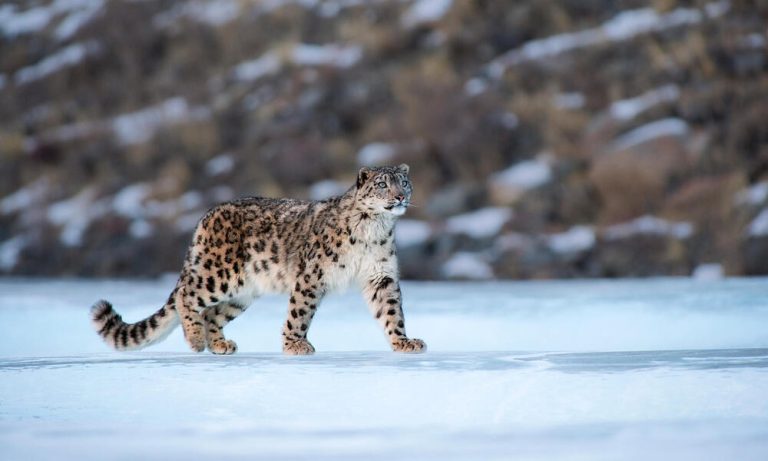
The population of rare snow leopards in Himachal Pradesh’s high-altitude tribal regions has grown by an impressive 62 per cent over the past four years. According to a newly released wildlife survey, the count increased from 51 in 2021 to 83, showcasing the success of long-term conservation strategies.
Officials from the state Forest Department’s Wildlife Wing announced the findings on the first day of Wildlife Week (October 2–8). The survey, which excludes cubs, has surpassed the upper confidence estimate of 73 from the 2021 survey, suggesting a potential expansion of habitats for these elusive big cats.
The study involved a large-scale camera-trapping exercise across six sites, covering nearly 26,000 sq km. The survey identified snow leopards and their habitats in regions such as Lahaul-Spiti, Kinnaur, and Pangi valley, with sightings recorded beyond protected areas like Kibber Wildlife Sanctuary and Great Himalayan National Park.
Alongside snow leopards, the survey also mapped populations of prey species including blue sheep, Himalayan ibex, and musk deer. Additional wildlife such as Himalayan wolves, brown bears, leopards, red foxes, and martens were also documented.
Of particular note is the first official sighting of Pallas’s cat in Kinnaur and the rediscovery of the woolly flying squirrel in Lahaul, highlighting the state’s rich biodiversity. These significant findings add to the growing list of wildlife species thriving in Himachal Pradesh.
Experts attribute the success of the survey to the active community involvement in conservation efforts. Local youth and women from Kibber village in Spiti played crucial roles in camera trap deployments and data analysis. The collaboration between forest officers and villagers expedited field operations, allowing the survey to be completed in just one year, compared to three years for the previous survey.
The cost-effective survey has created a scalable framework for long-term snow leopard monitoring in India, making it easier for other regions to adopt similar methods. This marks a significant milestone for Himachal Pradesh, as it becomes the first state in the country to conduct a second statewide snow leopard assessment.
The impressive rise in the snow leopard population underlines the effectiveness of conservation efforts and the need for continued community engagement. As snow leopards serve as an indicator of the health of alpine ecosystems, this increase speaks well to the environmental management strategies in place.
As wildlife enthusiasts and conservationists celebrate this achievement, the task ahead remains clear: to ensure sustainable habitat preservation and mitigate the effects of climate change, which poses an ongoing threat to these majestic animals and their ecosystem.
