

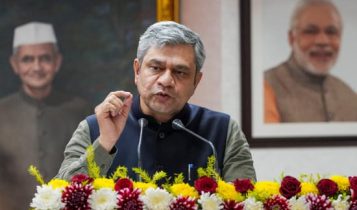
NEW DELHI: Minister for Electronics and IT, Ashwini Vaishnaw, has issued a stern warning to India’s semiconductor industry about growing cyber threats as the nation advances in global chip manufacturing. In an interview with PTI, Vaishnaw emphasized the importance of vigilance against potential disruptions stemming from geopolitical tensions.
“India’s new role in designing and manufacturing chips will be perceived as a threat by established interests in the global chip value chain,” stated Vaishnaw. He underscored the necessity for continuous monitoring, stating, “We have to continuously be watchful of the potential geopolitical risks which will arise.”
As countries increasingly view India as a trusted partner for product development and manufacturing, the Minister warned that complacency is not an option. “We should not take it lightly. We should be cognizant of the risks and challenges from players who might not favor India’s ascent in the semiconductor sector,” he explained.
Vaishnaw elaborated on the industry’s responsibility to prepare for potential cyberattacks and other threats. “I have candidly told the entire industry to be prepared for cyber attacks, as well as any other kinds of disruptions from countries opposed to India’s rise in the semiconductor value chain.”
The semiconductor sector is crucial for India’s aspirations to enhance its technological and manufacturing capabilities. The Indian government has committed to building a robust ecosystem that goes beyond mere chip assembly. This includes chip design, equipment, materials, and fabrication processes.
The Union Cabinet recently approved the Semicon 2.0 initiative with an investment of ₹1,27,500 crore dedicated to supporting various facets of the semiconductor workforce, infrastructure, and research and development. This initiative signifies a major step in solidifying India’s presence in the global semiconductor market.
The first phase of the semiconductor initiative paved the way for 12 manufacturing projects, drawing over ₹1.64 lakh crore in investments, with five initiatives, including Micron and Kaynes, already running in production.
Currently, India’s ambition is to evolve from being solely a packaging hub to establishing a comprehensive domestic supply chain. The country aims to attract global firms to manufacture and innovate semiconductor technologies on Indian soil.
Investment interest is accelerating, with the government noting it has welcomed around ₹1 lakh crore in commitments under the second phase of the semiconductor program. This surge of investor confidence was evident at the SEMICON India event, a platform highlighting India’s semiconductor strength, which witnessed major announcements. Among these were Applied Materials’ announcement of a USD 5 billion investment plan through 2035, Lam Research’s pledge of ₹10,000 crore, Tata Electronics’ ambitious 363-acre vendor park in Dholera, and Fujifilm’s ₹800-crore semiconductor material plant.
“The industry is now aware of the cyber threats and is taking the right measures,” Vaishnaw concluded, expressing optimism about the preparedness of stakeholders within the semiconductor landscape.
