
Chief Secretary Atal Dulloo announced on Thursday that the Pradhan Mantri Skilling and Employability Transformation through Upgraded ITIs (PM-SETU) scheme will revolutionize Jammu and Kashmir’s Industrial Training Institutes (ITIs). This initiative will entail an indicative investment of ₹482 crore over five years, aimed at equipping the youth with in-demand skills while linking them to promising employment and entrepreneurship opportunities.
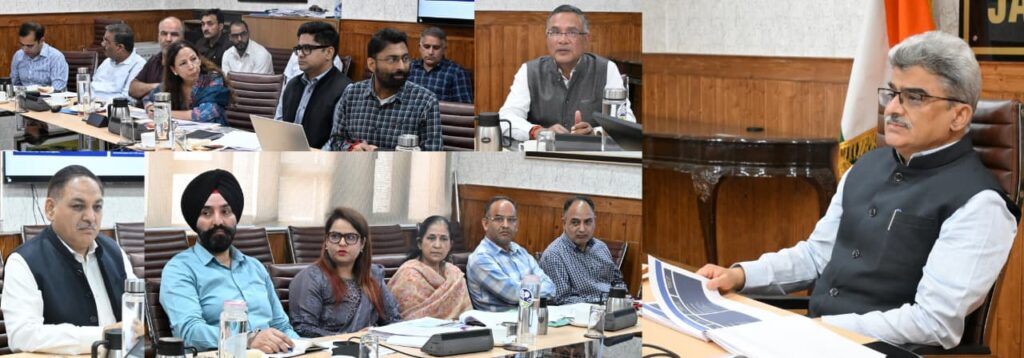
Dulloo made the announcement during the first UT-level Steering Committee meeting to oversee the implementation of PM-SETU in Jammu and Kashmir. This meeting brought together key officials, including the Additional Chief Secretary of Finance, the Commissioner Secretary of Education, and representatives from various industrial bodies.
The Chief Secretary emphasized that PM-SETU serves as an effective model for reinvigorating skill education. He pointed out that the upgradation of ITIs must extend beyond mere infrastructure improvements to create an ecosystem aligned with industry needs, aiming to equip Jammu and Kashmir’s youth with skills that lead to quality, well-paying jobs.
Dulloo urged industry partners to contribute not only financially but also through technology transfer, expertise, modern training methods, and pathways to credible employment. He highlighted the need for coordinated efforts among the government, industry, and educational institutions to design curricula and training programs that reflect emerging market demands.
During the meeting, Secretary of the Skill Development Department, Kumar Rajeev Ranjan, presented a comprehensive overview of the proposed institutional architecture. He noted that PM-SETU will involve an investment of approximately ₹482 crore in Jammu and Kashmir over five years, with ₹241 crore assigned to each planned hub-and-spoke cluster.
The initiative will upgrade 10 Government ITIs into modern skill institutions, categorized into two hub-and-spoke clusters. Each Hub ITI will act as a central technology and resource centre for four Spoke ITIs, facilitating access to advanced tools, modern training infrastructure, incubation facilities, and capacity-building support for trainers. The initiative aims for a robust institutional placement rate of 75 percent.
A significant aspect of PM-SETU is its industry-led implementation framework, which will utilize Special Purpose Vehicles (SPVs) to foster greater industry involvement in governance, course selection, technology integration, training, and placement. This framework guarantees that training remains aligned with demand, regularly adjusting to market trends and workforce needs.
The identified priority sectors for the transformation encompass advanced manufacturing, automotive, heavy engineering, electricals, electronics, telecommunications, process industries, and food processing, along with textiles, garments, and construction. These sectors showcase strong employment potential for J&K’s youth.
The committee also shared details about the tripartite financial contribution model for PM-SETU, which distributes funding responsibility as follows: 74.7 percent from the Central Government, 8.3 percent from the UT Government, and 17 percent from Anchor Industry Partners (AIPs). Each Hub ITI will incur an estimated cost of approximately ₹81 crore, while each Spoke ITI will cost around ₹40 crore.
To become AIPs, companies must meet established criteria, including an annual turnover of at least ₹200 crore over the last three years, a positive net worth, and a workforce of 500 or more employees.
Concluding the meeting, Chief Secretary Dulloo asserted that the success of PM-SETU will hinge on its ability to create a steady pipeline of industry-ready skilled manpower, linking Jammu and Kashmir’s youth to enhanced employment opportunities. He positioned skill development as a critical anchor for the economic progress of the Union Territory.
