
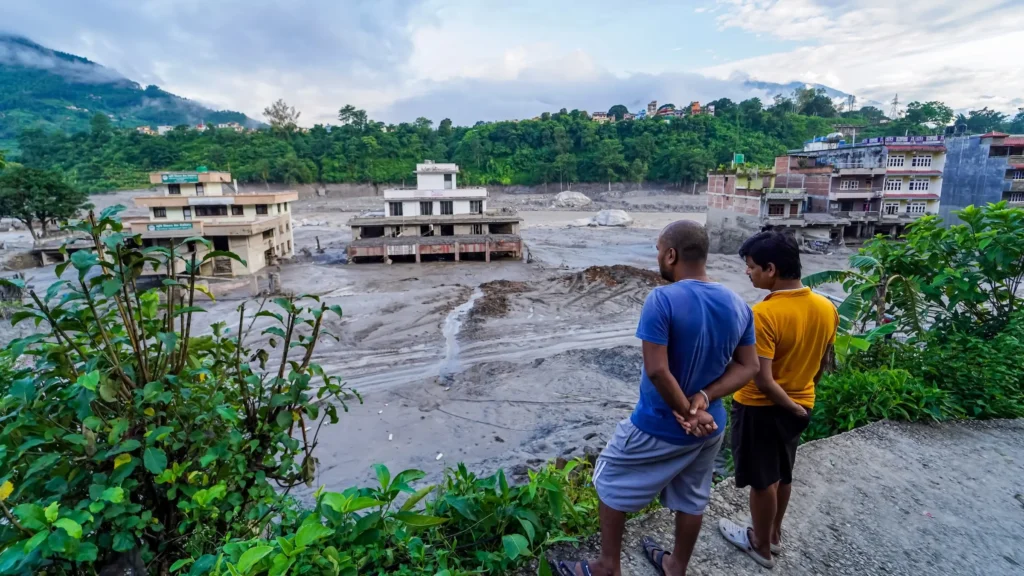
The death toll from Nepal’s flash floods surged to 1,344 on Saturday, with rescue teams finding more bodies amid a desperate search for the 4,898 individuals still missing. This disaster has devastated multiple districts, prompting national and international response efforts.
Officials from Nepal’s National Disaster Risk Reduction and Management Authority reported that over 13,000 individuals have been rescued from the affected areas. The floods were triggered by an ice-rock avalanche near the Nepal-Tibet border on August 26, releasing massive volumes of water into the Bhotekoshi River, devastating downstream communities.
The floodwaters obliterated homes, swept away vehicles, and damaged vital infrastructure, including roads and bridges, while severely impacting hydropower projects throughout northern and central Nepal.
Among the deceased, authorities confirmed that 758 were adults and 85 were children. The state of many bodies was compromised due to prolonged exposure to water and debris. Authorities reported that 1,030 bodies have been laid to rest temporarily after procedures such as DNA collection.
The Chitwan district has witnessed the highest fatalities, with approximately 360 bodies found. Recovery teams have also located bodies in Rasuwa, Nuwakot, Dhading, Gorkha, Tanahun, Nawalparasi East, and Nawalparasi West.
Tragically, among those missing are more than 600 children from Rasuwa and Nuwakot. As authorities continue to monitor water levels in major rivers, including the Koshi and Narayani, search efforts remain urgent.
For the eleventh consecutive day, joint rescue teams led by the Nepal Army are engaged in intensive search operations. The focus remains on hydropower projects where countless workers are believed trapped within tunnels.
Assistance from experts from India and China bolsters Nepal’s rescue operations. On Friday, two workers were successfully rescued from the Trishuli 3A hydropower project tunnel. They are identified as Kabir Maharjan, a 45-year-old mechanical supervisor, and 30-year-old foreman Sanjay Sah.
A unique collaboration has emerged as an Indian rescue team has worked alongside the Nepal Army to create a temporary track within the Rasuwa district’s Chilime tunnel, allowing heavy rescue equipment to access critical areas.
The disaster has not only impacted Nepal; it has also claimed at least 21 lives on the Chinese side of the border, with over 500 people reported missing in Tibet, according to media reports.
As search efforts continue, authorities persist in their endeavor to locate missing individuals, recover bodies, and evaluate rising river conditions in some of the worst-hit locations.
