

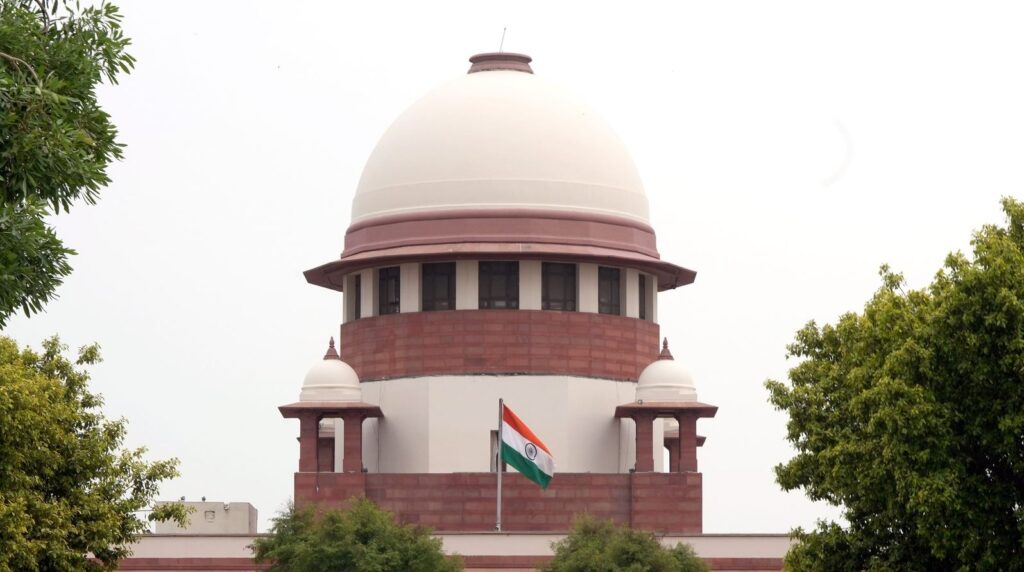
The Supreme Court of India on Tuesday adjourned the hearing for pleas filed by the committee of management of Sambhal’s Jama Masjid. The pleas challenge an order of the Allahabad High Court related to the survey in the ongoing Shahi Jama Masjid-Harihar temple dispute. The next date for this critical case is set for August 18, 2025.
A bench comprising Justices P S Narasimha and Alok Aradhe decided to defer the matter after acknowledging the circulation of a request for adjournment. This decision came as two separate pleas from the mosque committee were set to be heard on Tuesday.
The Supreme Court had previously established a significant precedent when it restrained the lower courts from entertaining new lawsuits or issuing any effective orders linked to religious sites on December 12, 2024. This order arose during the examination of challenges against various provisions of the Places of Worship Act, 1991.
The Places of Worship Act prohibits the conversion of places of worship and mandates that these locations maintain their religious character as it existed on August 15, 1947. However, the historic Ram Janmabhoomi-Babri Masjid dispute at Ayodhya remains outside the purview of this law.
The Allahabad High Court had earlier dismissed the mosque committee’s plea against the survey ordered by a Sambhal court, asserting that the civil court’s direction was maintainable. The high court underscored the legality of appointing a court commissioner for the mosque survey, which has implications in local judicial proceedings.
The mosque committee had contested a November 19, 2024, order from the civil judge directing the survey of the 16th-century mosque. The committee argued that a second survey performed on November 24, 2024, occurred without any judicial directive, rendering it illegal.
On August 22 last year, the Supreme Court expressed its willingness to hear the committee’s plea concerning the high court’s ruling. The apex court had also mandated the parties involved to maintain the status quo as of that date.
The case centers around a claim that the Jama Masjid was built by Mughal emperor Babur in 1526 following the demolition of the, now-revered, Harihar temple. This ongoing case reflects the sensitive and complex nature of religious disputes in India, often leading to clashes and unrest in communities.
On November 29, 2024, the Supreme Court ordered an immediate halt to the proceedings in the Sambhal court regarding the mosque and its survey. The apex court also instructed the Uttar Pradesh government to ensure peace and harmony in Sambhal, underlining its commitment to upholding communal harmony amid rising tensions.
The outcome of this case remains pivotal not only for the parties involved but also for the broader narrative surrounding religious heritage and communal identities in India. As the court proceedings advance, numerous stakeholders await clarification on the legal frameworks governing places of worship and their historical designation.
