
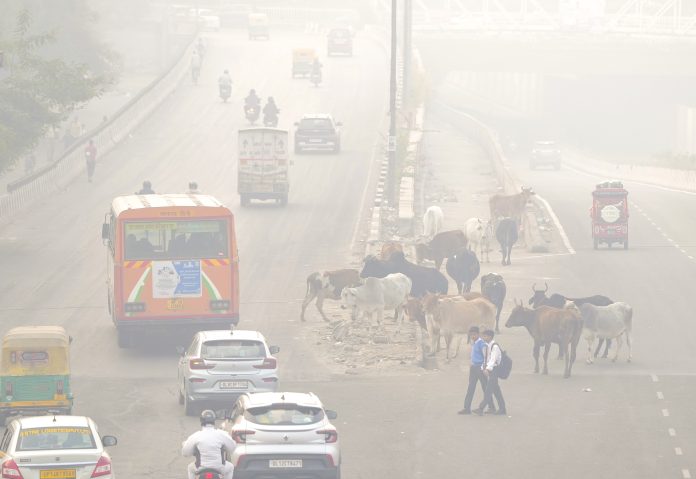
Delhi faces a challenging day as it battles dangerously poor air quality, with the Air Quality Index (AQI) soaring to 360 on Saturday morning. The Central Pollution Control Board (CPCB) categorizes this level as ‘very poor,’ marking an ongoing health concern for residents.
The AQI system, as defined by the CPCB, identifies levels from 0–50 as good and progresses to 401–500, which indicates severe conditions. Unfortunately, Delhi’s current AQI suggests that conditions warrant caution.
The air quality can significantly impact respiratory health, particularly for vulnerable groups, including children and the elderly. Doctors advise residents to limit outdoor activities and wear masks if they must go outside.
The India Meteorological Department (IMD) reported that Delhi also recorded a minimum temperature of 11.8°C, a drop that coincides with pollution levels. Foggy conditions added complexity to the atmosphere, contributing to the worsening air quality.
As per IMD forecasts, foggy conditions will persist throughout the day. The temperature is expected to peak at around 28.2°C, which, combined with high humidity, complicates the city’s air pollution scenario. At 8:30 a.m., the relative humidity registered at an alarming 100 percent, indicating saturated air that can exacerbate the persistence of pollutants.
This situation emphasizes the need for immediate action by both governmental bodies and citizens. The Delhi government has been urged to implement stricter measures to curb emissions and create healthier air standards.
Residents have expressed concern over the impact of the toxic air, with many experiencing respiratory issues and discomfort. ‘It’s becoming increasingly difficult to step outside without feeling the effects of the pollution,’ remarked a local resident.
The rise in air pollution and its health implications have turned into a public health crisis in India, especially in highly populated cities like Delhi. Despite governmental action plans, poor air quality days remain frequent.
Efforts such as adhering to the Graded Response Action Plan (GRAP) are crucial, yet awareness and compliance among the public also play significant roles. Citizens must engage effectively in reducing their individual impact on air quality by opting for public transport, carpooling, or using electric vehicles.
The recent spike in Delhi’s AQI serves as a grim reminder of the environmental challenges that lie ahead. Authorities and citizens alike must collaborate to ensure cleaner air in the national capital.
