
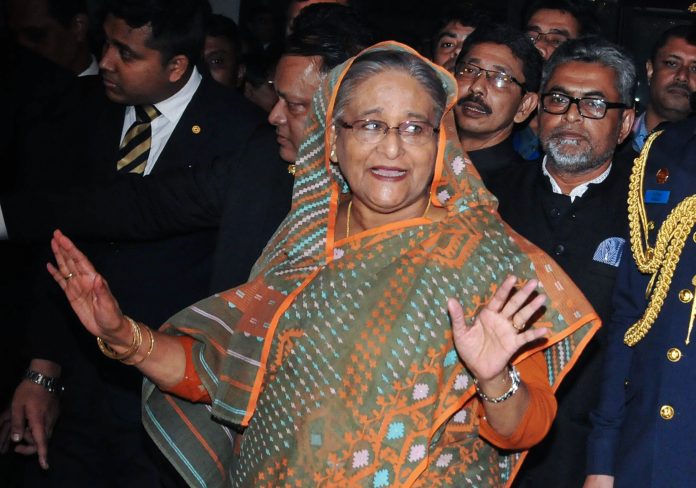
Former Bangladesh Prime Minister Sheikh Hasina has clearly stated she will return to her homeland only after the restoration of ‘participatory democracy’, lifting the ban on the Awami League, and the conduct of free and fair elections. In an exclusive email interview with PTI, Hasina urged attention to these critical issues while criticizing the current unelected government.
Hasina, currently residing in India, accused the Yunus-led interim government of “endangering ties with India” and empowering extremist forces within Bangladesh. She expressed her gratitude towards India for providing her refuge during this tumultuous time.
“I am immensely grateful to India’s government and its people for their kind hospitality,” said Hasina, reflecting on her current situation. Her hope for returning to Bangladesh relies heavily on the reinstatement of democratic processes.
“The most important condition for my return to Bangladesh is the same condition that the Bangladeshi people require: a return to participatory democracy,” she emphasized. The political landscape in Bangladesh has faced considerable turmoil, especially since Hasina resigned and fled the country on August 5, 2024, amid violent anti-government protests.
When asked about the protests, Hasina acknowledged that her government lost control over the situation. “Obviously, we lost control of the situation and that was regrettable,” she stated. She blamed seasoned political activists posing as student leaders for inflaming the unrest.
Hasina rejected allegations that she had called for a boycott of the upcoming February elections. She made it clear that any election held without the participation of the Awami League would lack legitimacy. “Tens of millions of people support us. It would be a huge missed opportunity for a country that badly needs a government with genuine consent of the people,” she asserted.
Her criticism of the Yunus administration was unequivocal. She particularly condemned Dr. Muhammad Yunus’s alleged hostility towards India, which she claims jeopardizes Bangladesh’s essential relationship with its neighbor. “Yunus’ hostility to India is foolish and self-defeating. He is unelected, chaotic, and dependent on extremist forces,” she articulated.
Reassuring Indian citizens who may feel unsettled by recent developments in Bangladesh, Hasina remarked, “The interim government doesn’t represent what our people think. India is and will remain our nation’s most important friend.”
Willing to defend her actions under international scrutiny, Hasina stated her readiness to stand trial if monitored internationally, including at the International Criminal Court. She alleged that Yunus avoids such examination because “an impartial tribunal would acquit me”.
Hasina denounced the Bangladesh International Crimes Tribunal as a political tool aimed at silencing her and the Awami League. “They want to eliminate us as political forces. The fact that they would use the death penalty to silence opponents shows how little respect they have for democracy or due process,” she accused.
Despite once receiving passive support from some Western liberals, Hasina noted that this backing is waning as they witness Yunus placing radical elements in his cabinet, discriminating against religious minorities, and dismantling constitutional protections.
Sheikh Hasina’s stark comments emphasize the dire political climate in Bangladesh and her unwavering commitment to democratic values, leaving her future and that of her party hanging in the balance until significant changes occur.
