

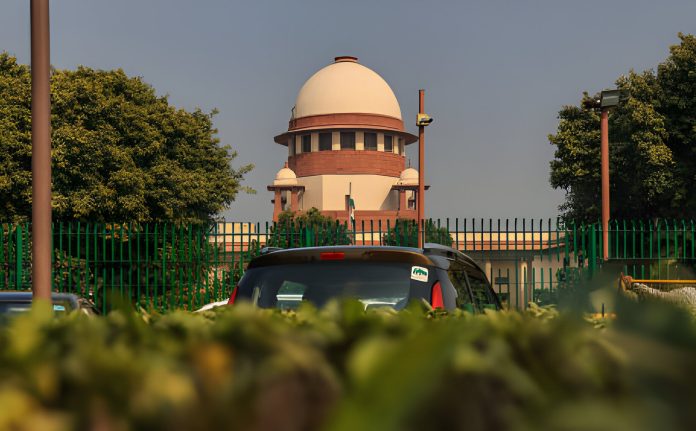
The Supreme Court on Wednesday referred the pivotal question of anticipatory bail applications to a three-judge bench. The key issue is whether litigants can directly approach high courts or must first seek relief from a sessions court.
A bench consisting of Justices Vikram Nath and Sandeep Mehta stated that the matter needs to be examined by a larger bench once formed. They remarked, “This matter requires to be heard by a three-judge bench.”
Previously, the Supreme Court appointed senior advocate Siddharth Luthra as amicus curiae to provide assistance regarding this issue, further indicating the importance the court places on clarifying the bail application process.
Kerala High Court’s Practice Under Scrutiny
The Supreme Court has shown concern over the unique practice of the Kerala High Court, which has been entertaining anticipatory bail applications without litigants initially approaching the sessions court. On September 8, the bench questioned, “One issue that is bothering us is that in the Kerala High Court, anticipatory bail applications are regularly entertained directly. Why is that so?”
The court referenced provisions in both the old Code of Criminal Procedure and the new Bharatiya Nagarik Suraksha Sanhita (BNSS), 2023, highlighting a hierarchical process for bail applications. Section 482 of BNSS lays out directives for granting bail to individuals facing imminent arrest.
The justices pointed out, “It doesn’t happen in any other state. Only in the Kerala High Court… applications for anticipatory bail are regularly entertained directly.”
This inquiry arises amidst a case involving two men challenging a Kerala High Court order that denied them anticipatory bail. The petitioners had approached the high court directly, bypassing the sessions court, prompting the Supreme Court to express concern over the potential lack of factual clarity that such practices may incur.
During the proceedings, the Supreme Court remarked, “We are inclined to consider whether the option to approach the high court is a matter of choice for the accused or whether it should be mandatory to first go to the sessions court.”
In a significant development, the Supreme Court has also issued notice to the Registrar General of the Kerala High Court, seeking its response to this pressing issue regarding anticipatory bail.
This situation highlights the ongoing discourse about procedural uniformity in Indian jurisprudence and the appropriate channels through which legal relief can be sought. As this matter progresses, the involvement of a three-judge bench indicates a critical evaluation of established legal norms concerning anticipatory bail.
Expert legal opinions suggest that the clarification of processes regarding anticipatory bail could impact how litigations unfold in high courts, particularly in Kerala. Legal analysts argue that consistency across the nation’s judiciary is essential for upholding the rule of law and ensuring fair access to justice.
Furthermore, the legality and appropriateness of direct approaches to high courts may stand as a precedent for future cases, potentially reshaping the landscape of anticipatory bail applications across India.
