
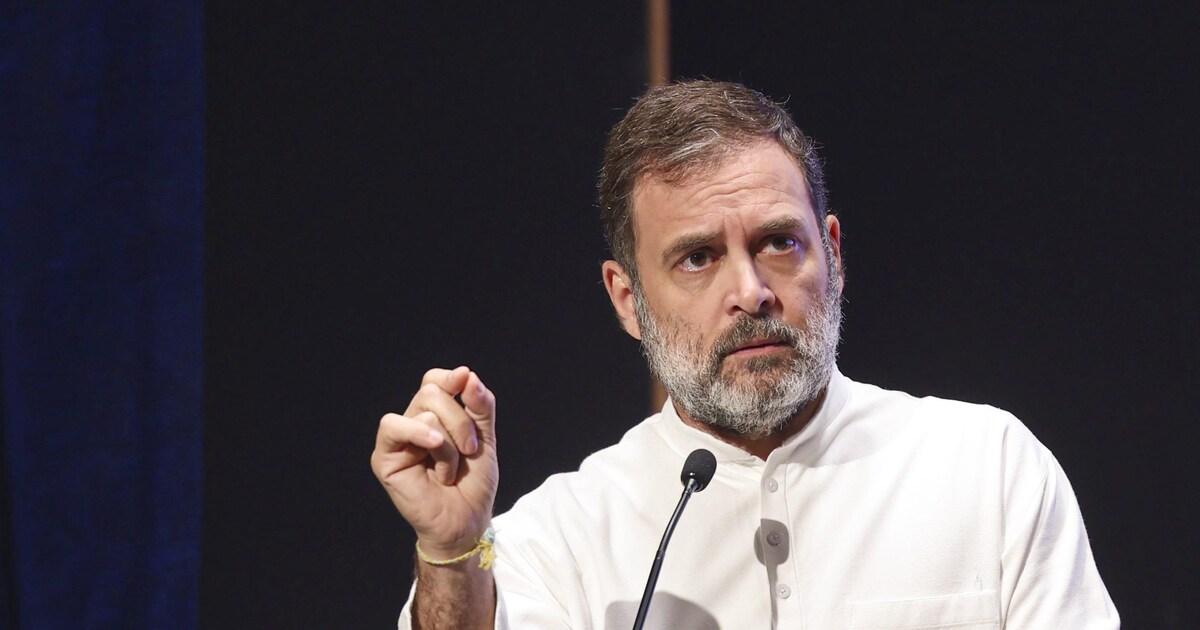
The Congress Party intensified its accusations against the BJP-RSS on Monday, claiming that the ruling coalition engages in a conspiracy to silence Rahul Gandhi, the Leader of Opposition. This statement comes in light of a chilling death threat made by Printu Mahadev, a former leader of the Akhil Bharatiya Vidyarthi Parishad (ABVP), during a televised debate.
Pawan Khera, head of the Congress media and publicity department, stated that a BJP spokesperson publicly declared that ‘Rahul Gandhi will be shot in the chest’ without facing any consequences.
“This alarming statement indicates a serious lapse in action against hate speech, especially directed at a prominent political figure,” Khera remarked, adding that the Congress party will not tolerate attempts to intimidate Gandhi. He questioned the motives behind the BJP’s lack of action, claiming it reflects a deeper conspiracy.
The former ABVP leader’s comments have not only sparked outrage within the Congress party but also raised concerns about the political climate in India. Khera characterized the BJP’s tactics as attempts to suppress political discourse and silence voices of dissent.
“This conspiracy reveals the desperation of those losing the ideological battle. When they fail to counter the ideas of Rahul Gandhi, they resort to threats and intimidation,” Khera asserted. He further emphasized that Rahul Gandhi’s growing popularity—from Kashmir to Kanyakumari—signals a backlash against the BJP’s governance.
Congress general secretary K.C. Venugopal has taken action by reaching out to Union Home Minister Amit Shah, demanding accountability for the incendiary remarks. He argued that failure to respond adequately would imply complicity in normalizing violence against the opposition.
In a clear denouncement, Venugopal stated, “The remarks made by Mahadev are not mere slips of the tongue; they represent a calculated threat that undermines the very fabric of Indian democracy.” He demanded swift intervention to ensure Gandhi’s safety and stressed the need for immediate legal action to discourage such behavior.
Venugopal highlighted that threats against Gandhi resonate more than a personal attack; they challenge the democratic ideals he embodies. “This is symptomatic of a broader, toxic atmosphere that jeopardizes not only individual politicians but the entire democratic process,” he noted.
The Congress party’s response underscores a larger narrative of political discourse in India, where threats against leaders have become disturbingly common. The party vocalized the need for a decisive stance against such intimidation tactics, asserting that unchecked aggression could lead to severe repercussions.
The Congress has called upon citizens and fellow political leaders to unite against this culture of hate and violence. In a video statement, Khera remarked, “People must recognize the patterns of these violent threats as attempts to suppress our democracy.”
As political tensions rise ahead of upcoming elections, the Congress party’s allegations pose significant implications for the BJP and its governance model. The nation watches closely as these allegations unfold, emphasizing the crucial role of civil discourse in maintaining democratic integrity.
