

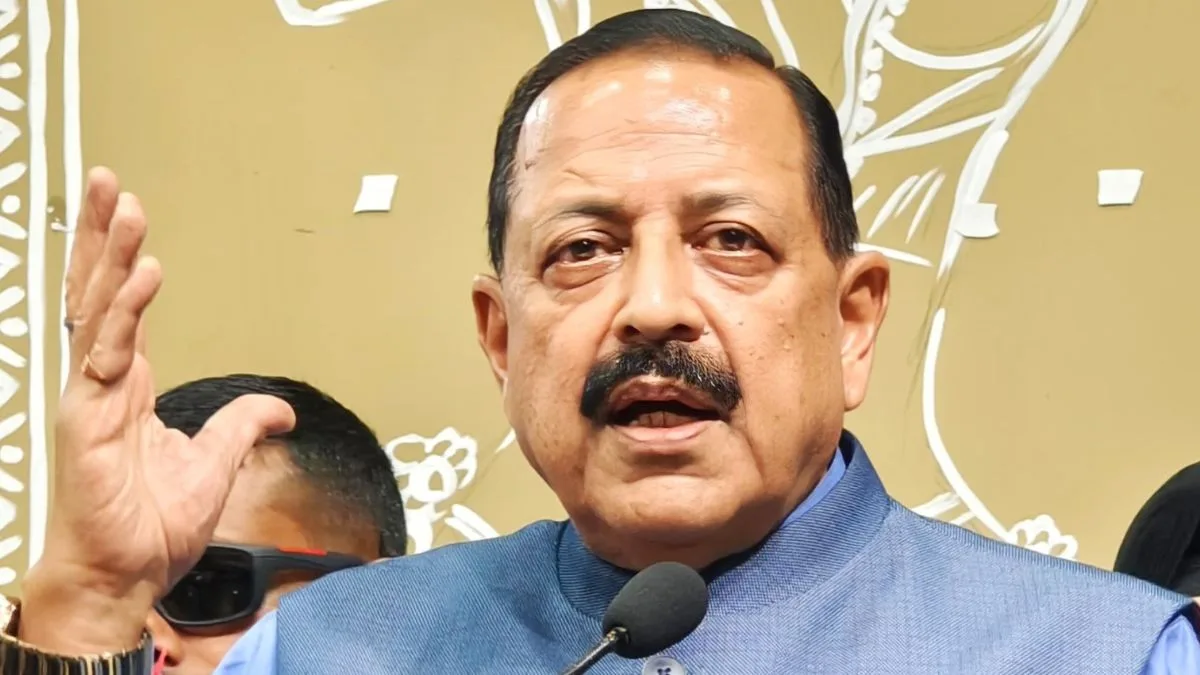
Union Minister Dr. Jitendra Singh announced that Jammu & Kashmir will take the lead in India’s journey toward ‘Destination 2047’ during a recent event at the University of Kashmir. This revelation came during the launch of the ATL Sarthi and Frontier Region Programme of the Atal Innovation Mission. Singh highlighted the strategic importance of Jammu & Kashmir as the region prepares to contribute to India’s emerging innovation landscape in the next two decades.
In remarks made on Tuesday, Dr. Jitendra Singh emphasized the shifting dynamics of India’s economy, poised to move from the fourth to the third position globally. He attributed this growth to previously underexplored regions like J&K, which gained significant attention after Prime Minister Narendra Modi took office in 2014. The integration of resources, including rich Himalayan reserves and river systems, highlights the region’s potential for innovation-led economic development.
During the launch of the ATL Sarthi initiative, Dr. Singh celebrated Kashmir University’s role as a pivotal institution in connecting the Union Territory with India’s broader economic growth. He described the event as a “dual celebration,” marking the university’s engagement in national development efforts.
The Frontier Region Programme aims to establish 500 new Atal Tinkering Labs (ATLs) across J&K, forming a substantial part of the total 2,500 labs allocated for frontier regions, with a projected investment of ₹100 crore. These labs will provide students with access to advanced technologies such as robotics, 3D printing, and artificial intelligence, setting the stage for youthful innovation.
Dr. Singh pointed out the importance of technology in driving India’s economic progress over the last decade. He noted significant developments in sectors like space and biotechnology, forecasting growth in India’s space economy from its current value of $8 billion to an estimated $40-45 billion within ten years. This growth trajectory includes over 400 startups actively contributing to the space sector.
Furthermore, the minister stressed the necessity of public-private partnerships for sustainable economic growth, referencing successful collaborations in space and biotechnology. Programs such as InSpace and BIRAC have demonstrated how structured cooperation between private entities and government can yield substantial results.
Turning the spotlight on Jammu & Kashmir’s unique agricultural ventures, Dr. Singh noted the success of the “Aroma Mission.” This initiative has spurred the development of thousands of lavender and flower-based startups, with around 3,500 flourishing in the region. He observed that many young individuals are returning to their roots from corporate jobs, opting for entrepreneurship in these innovative sectors.
Dr. Jitendra Singh shared that the innovation pipeline in Jammu & Kashmir showcases its burgeoning talent, as 50 local students placed among the top 1,000 in the nationwide School Innovation Marathon. He called upon students and their families to dismiss preconceived notions that startups can only thrive in metropolitan areas. He pointed out that almost half of India’s startups now originate from Tier 2 and Tier 3 cities.
Concluding his address, the minister remarked, “As we envision India@2047, the students in these tinkering labs will be in their prime working years and will become the torchbearers of a developed India.” This vision underscores the pivotal role Jammu & Kashmir will play in shaping the future of the nation.
The event saw participation from notable figures, including Lieutenant Governor Manoj Sinha, Chief Minister Omar Abdullah, Education Minister Sakina Masood, University Vice-Chancellor Prof. Nilofer Khan, and AIM Mission Director Dr. Deepak Bagla.
